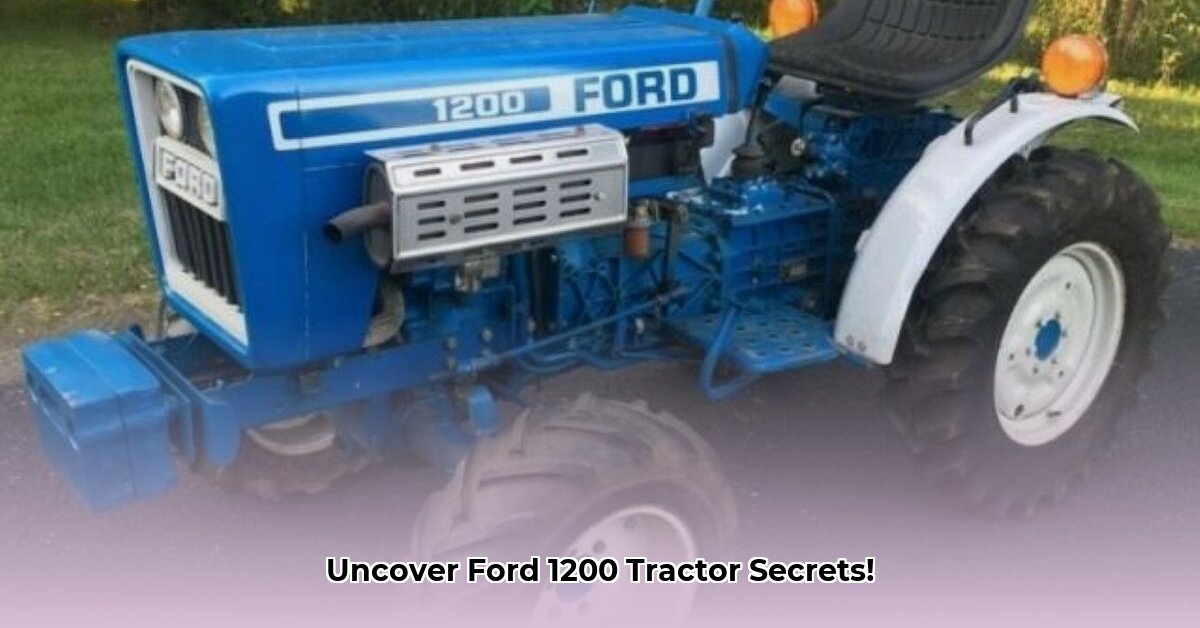
The Ford 1200 tractor, a compact powerhouse from the late 1970s and early 1980s, offers a compelling blend of vintage charm and surprising capability. Manufactured by Shibaura in Japan and rebranded by Ford, this 16-horsepower tractor, though modest by modern standards, proved remarkably versatile for a wide range of tasks on smaller properties. This comprehensive guide explores its history, capabilities, market value, and provides practical advice for prospective owners, covering everything from routine maintenance to comprehensive restoration. For more in-depth information, check out this detailed guide.
A Look Back: History and Key Features
The Ford 1200 represents a simpler era of farming, a time before the dominance of large, technologically advanced equipment. Produced between approximately 1979 and 1982, its compact size and three-point hitch system allowed for the use of various attachments, expanding its functionality beyond the typical expectations for a tractor of its size. Its agility made it ideal for maneuvering in confined spaces, such as orchards or around buildings. This versatility, coupled with its relatively straightforward design, made it popular among smaller landowners and hobby farmers. Its simple design also contributes to easier maintenance and repair, though finding replacement parts might present a challenge. This compact machine was ideally suited for tasks such as lawn mowing, snow removal, and light construction work.
Capabilities and Limitations: What the Ford 1200 Can (and Can't) Do
The Ford 1200's compact stature was its greatest asset. Its maneuverability in tight spaces was unmatched by larger tractors, but this advantage comes with limitations. Its 16-horsepower engine, while sufficient for most smaller properties, would struggle with large-scale agricultural operations. While suitable for tasks such as tilling small gardens or hauling light loads, it’s not a suitable choice for extensive fieldwork. Its 10 forward and 2 reverse gears offered excellent flexibility but limited power output. This makes it ideal for home gardens or small-scale property maintenance tasks.
Market Value and Collector Interest: Is it a Good Investment?
Determining the market value of a used Ford 1200 hinges on several critical factors. The condition is paramount; a well-maintained tractor with original or well-preserved attachments will command a significantly higher price. The availability of replacement parts is another significant consideration. The age of the tractor will also play a role.
While it may not fetch the astronomical prices of rare vintage tractors, its compact size and historical significance make it attractive to collectors. Therefore, its value proposition extends beyond pure functionality; it holds sentimental value for many enthusiasts who appreciate vintage agricultural equipment.
Maintenance and Restoration: Keeping Your Ford 1200 Running Smoothly
Owning a classic tractor requires dedication to regular maintenance. Proactive care will extend the life of your machine and prevent costly repairs.
Routine Maintenance: Essential Steps for Optimal Performance
- Fluid Checks: Regularly monitor engine oil, transmission fluid, and hydraulic fluid levels. Low levels signal potential leaks requiring immediate attention.
- Filter Changes: Replace air, fuel, and oil filters as recommended by the manufacturer. Neglecting this can severely compromise engine performance.
- Belt Inspection: Inspect all belts for wear and tear. Replace cracked or frayed belts promptly to avoid potential breakdowns.
- Lubrication: Lubricate all moving parts according to the owner's manual specifications. Proper lubrication is crucial for preventing premature wear.
Restoration: A Rewarding but Demanding Project
Restoring a Ford 1200 is a substantial undertaking, requiring significant time and resources. Sourcing parts can be challenging, requiring persistence and utilizing online forums and communities dedicated to vintage Ford tractors.
Step-by-Step Restoration Guide:
- Assessment: Evaluate the tractor's condition before beginning any work. Determine the scope of the restoration (partial or full) and allocate appropriate resources.
- Parts Sourcing: Identify and acquire necessary replacement parts, utilizing online resources, vintage tractor parts suppliers, and potential scrapyards.
- Mechanical Restoration: Prioritize mechanical restoration, focusing on engine repair or rebuild, transmission, hydraulics, and other critical systems. Refer to a service manual for precise specifications and procedures.
- Cosmetic Restoration: Tackle cosmetic restoration after confirming mechanical soundness. This may include repainting, replacing decals, and cleaning or replacing chrome components.
- Safety: Always prioritize safety. Use appropriate personal protective equipment (PPE) when handling hazardous materials and during mechanical work.
Weighing the Pros and Cons: Is a Ford 1200 Right for You?
Before making a purchase, carefully consider the advantages and disadvantages:
| Pros | Cons |
|---|---|
| Compact size, ideal for small spaces | Lower horsepower; unsuitable for large-scale work |
| Versatile, adaptable to various attachments | Parts availability might be challenging |
| Relatively simple mechanics | Age and wear can lead to increased maintenance needs |
| Collector's item; potential investment | Requires regular maintenance and potential repairs |
The Verdict: Should You Buy a Ford 1200?
The Ford 1200 isn't for everyone. It's not suitable for large-scale agricultural tasks. However, for those with smaller properties or those seeking a versatile machine for light-duty work or a vintage tractor restoration project, the Ford 1200 offers a unique blend of capability and character. Thorough research and a realistic assessment of maintenance requirements are essential before making a purchase. With careful consideration, this compact tractor could prove to be a rewarding acquisition.